
Water Heater Installation in Aurora, IL
A water heater rarely gets replaced on a convenient day. It gets replaced when the second repair in two winters arrives, when the tank at twelve years starts weeping at the base, or when a full house cannot get through a morning of showers any more. Installation is the point where the next decade is decided, and most of those decisions happen before the new unit comes off the truck: how it is sized, how it vents, and whether the gas line and the space around it can carry what the label promises. We install and replace water heaters in Aurora and explain those choices first. Call (630) 467-6249.
Why Choose Us for Water Heater Installation in Aurora
Sized from the house, not from the shelf
Two houses with the same number of bathrooms can need different tanks, because the first-hour rating depends on how many people draw hot water at once and how cold the incoming water is. We ask about the household and the morning routine before a size is chosen, and we show you the number the choice is based on.
Venting decided before the box is opened
A replacement in an older Aurora home often meets a chimney that a high-efficiency furnace no longer warms. That changes whether an atmospheric tank, a power-vent unit or a direct-vent unit is the right answer, and it is settled by looking at the flue and the appliance group before anything is ordered.
The small parts are part of the job
A drain pan and discharge line, a properly sized expansion tank on a closed system, a shut-off on the inlet, a drip leg on the gas line and a new connector set are the details that decide whether the next failure is a wet floor or a dry one. They are quoted in the scope, not added as surprises.
Removal, disposal and a clean handover
The old heater leaves with us, the floor is left dry, and you get the model number, the settings and the maintenance schedule in plain language, so the next person who works on the unit starts from facts rather than guesswork.
WATER HEATER INSTALLATION IN AURORA
Why Now: Replacing a Water Heater Before an Aurora Winter
The January normal low at Chicago Aurora Municipal Airport is 12.6 F (NOAA 1981-2010 normals, Illinois State Water Survey), and that number drives the whole calculation. Cold ground and cold incoming water mean the replacement heater must raise water further before it reaches the tap, so a tank that was adequate in September delivers less hot water in January. A heater already near the end of its life does not fail politely in spring; it fails in the week the house needs it most, usually on a morning when nobody has time to deal with it.
Waiting until it fails also changes the installation. A planned replacement can be measured, vented and scheduled, and the unit that fits the space can be chosen calmly. An emergency swap happens in whatever is available, often with the old venting reused because there is no time to change it, and that is how a new heater inherits the problem that ended the old one. If the tank is over ten years old, has been repaired twice, or shows rust at the base, the decision is already due.
The second repair in two winters
One failed part on a tank with years left is a repair. A second failure in two seasons, on the same old tank, is a pattern, and the next part is usually more expensive than the first.
- Thermocouple or igniter again
- Element or thermostat again
- Relief valve replaced once already
- Same fault twice
Water at the base or rust on the shell
A tank that is wet at the bottom, stained down one side or rusting at the flue collar is telling you the lining is gone. That is not a part failure and it does not get better.
- Rust ring under the tank
- Water in the drain pan
- Stain down the shell
- Corroded flue collar
Hot water no longer keeps up
When the household has grown, a bathroom has been added, or a second shower runs at the same time, the old tank is not failing - it is undersized for how the house is used now.
- Runs out mid-shower
- Recovery takes hours
- New bathroom added
- More people in the house
The tank is twelve years old or more
Most tank heaters are expected to last eight to twelve years. Past twelve, the next failure is already inside the steel, and a repair is money spent on a tank that is about to be replaced anyway.
- Manufacture date over twelve years
- Anode rod used up
- Several small faults at once
- Parts getting scarce
Rumbling, popping and sediment
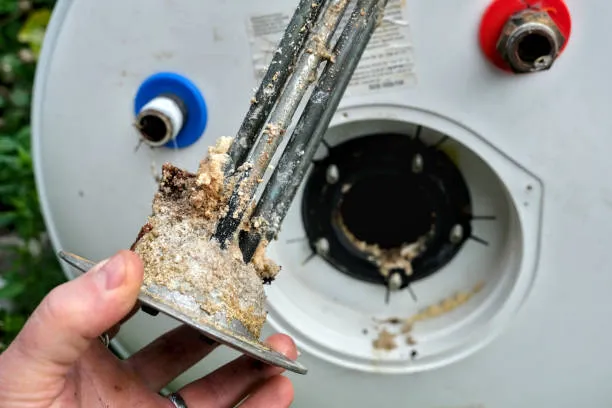
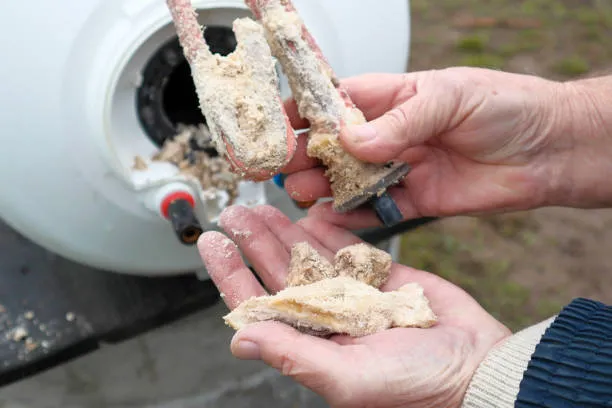
Sediment settles on the base, insulates the burner or the lower element and makes the heater work against its own scale. The noise is the symptom; the shortened life is the result.
- Rumbling when heating
- Popping from the base
- Slow recovery
- Sediment in the aerators
Venting that no longer suits the house
A flue that used to share a chimney with an older furnace can be left condensing when that furnace is replaced. Replacing the tank without addressing the vent repeats the problem on a new unit.
- Condensation on the connector
- Draft down the flue
- Newer furnace on the old chimney
- Staining on the tank
Proof: What Water Heater Installation Covers in an Aurora Home
Sizing a Replacement Heater for the House
Why the label size is not the answer
The number on the old tank tells you what was installed, not what the house needs now. Sizing a replacement starts with the first-hour rating, the gallons a heater can deliver in the first hour of heavy use, and compares it with how many people draw hot water at the same time. Incoming water temperature matters in an Aurora winter: cold inlet water means more of the tank's heat goes into raising it to temperature, so the same heater delivers less usable hot water in January than in June. Household size, bathrooms, a soaking tub, a recirculation loop and laundry habits all move the answer, which is why two houses of the same square footage can need different tanks. A tank that is right for three people is often the wrong tank for five, even in the same house.
Why it matters
An undersized replacement fails the same way the old unit did, and an oversized one cycles, wastes energy and wears faster.
What it helps you decide
It tells you whether the old heater was actually the right size, or whether the house changed around it.
Do this now
Count the showers that run at the same time in your house before you call (630) 467-6249.
Venting: Atmospheric, Power Vent and Direct Vent
The part of the job that is invisible after the fact
A standard atmospheric water heater drafts up a metal flue and needs a chimney that stays warm enough to keep exhaust rising. A power-vent unit uses a blower and plastic pipe, and a direct-vent unit takes combustion air from outside and exhausts outside through a sealed termination. The difference matters in Aurora houses where a high-efficiency furnace was fitted in the last fifteen years: that furnace no longer sends warm exhaust up the shared chimney, so the water heater's flue runs cold, condenses, and drips back down the connector. Choosing a replacement means looking at the chimney, the terminations and the combustion air supply as a group. Where a chimney is shared, the safe answer is often to stop sharing it and vent the water heater on its own route.
Why it matters
A correctly sized tank on the wrong venting arrangement fails early, and the failure looks like a leaking tank.
What it helps you decide
It decides which unit type fits the house, and whether the flue needs work alongside the heater.
Do this now
Photograph the flue and the pipe run before the visit if you can.
Tankless and Heat Pump Water Heaters
Where the alternatives actually fit
Tankless units heat water on demand and never run out, but they draw a large gas load in a short burst, which means the existing gas line may be too small, and a condensing unit needs a PVC vent and a condensate drain. Heat pump water heaters move heat instead of burning gas, and they need a cool, dry space with enough air volume, plus a condensate path; a cramped closet usually will not do. Both are legitimate choices in the right house and poor ones in the wrong house. The test is not preference, it is gas capacity, venting route, electrical supply, space and how the household uses hot water. Neither upgrade is a drop-in swap, and neither is worth doing without the survey that proves the house can carry it.
Why it matters
The wrong alternative costs more to run and to maintain than the tank it replaced.
What it helps you decide
It tells you whether the upgrade is genuine or whether a better tank is the honest answer.
Do this now
Have the gas meter and the electrical panel location ready when you call.
Gas Supply, Electrical and the Parts Around the Tank
The work that decides whether the install lasts
A replacement connects to more than two pipes. The gas line has to carry the burner input with the right pressure and a drip leg, the flue has to be sealed and supported, and the water connections need shut-offs and dielectric unions where dissimilar metals meet. On a closed system a thermal expansion tank protects the plumbing from the pressure a heating tank creates, and a drain pan with a discharge line protects the floor if the tank ever fails. An electric replacement needs the right breaker and conductor size for the element load. These parts are cheap compared with the damage they prevent, and they are the first things a rushed install skips. On an electric tank the element wattage decides the circuit, so a replacement with a higher rating may need a new breaker and conductor.
Why it matters
They are the difference between a heater that fails quietly into a pan and one that floods a finished basement.
What it helps you decide
It shows what the install includes beyond the box, before the work starts.
Do this now
Ask whether a pan, expansion tank and new connectors are in the scope.
The Scenario Where the Upgrade Disappoints
Here is the replacement that starts with the best of intentions. A household with a fifty-gallon tank is tired of running out of hot water, so the plan is a tankless unit: endless hot water, smaller footprint, no tank to leak. The unit arrives, the old tank comes out, and the first cold morning reveals the problem. The existing half-inch gas line cannot carry the burner at full fire, so the unit derates or faults out, and the vent run through the old chimney is not permitted for a condensing appliance.
None of that is the unit’s fault. It is the survey that was never done. A tankless retrofit depends on gas capacity measured at the meter, a venting route to an outside wall, a condensate path and enough clearance around the unit. Where those exist, the upgrade is real. Where they do not, the honest options are to upsize the gas line and run new venting, or to fit a larger tank that solves the same complaint for less disruption.
The same pattern shows up with heat pump water heaters in a closet that is too small to supply the air they need. The lesson is not that new technology is bad. It is that the house gets measured first. If you are considering a tankless or heat pump replacement, describe the space, the gas line and the flue when you call (630) 467-6249, and the answer will be about your house rather than a showroom.
REPAIR OR REPLACE
The Line Between Another Repair and a Replacement
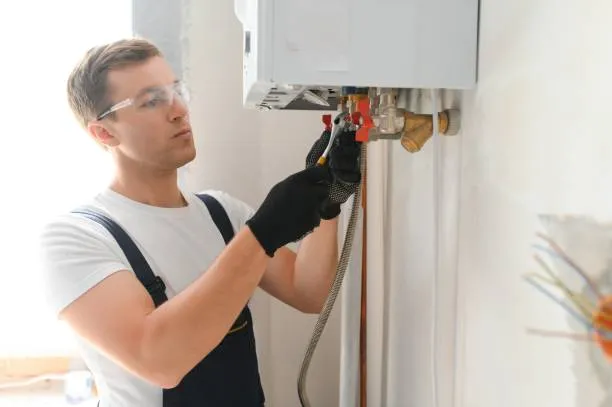
Water heaters are one of the few appliances where age settles most of the argument. A six-year-old tank with a failed thermocouple or element is a repair. A twelve-year-old tank with the same fault is a different conversation, because the part will outlive the tank around it. We read the manufacture date from the serial plate, look at the anode and the base, and tell you which side of the line your heater is on, including when the honest answer is that a repair is still worthwhile.
The framework we use
Under eight years with one failed component: repair. Over ten years, or with a leaking tank, a wet base or a failed gas control valve: replace. Over twelve years: replace, whatever the fault is.
Under eight years
A thermocouple, element, thermostat or relief valve is worth replacing. The tank still has most of its service life ahead of it.
Eight to ten years
The anode rod and the tank base decide it. If either is gone, a repair buys months rather than years, and a replacement is the better use of the money.
Over ten years with a major fault
A leaking tank, a failed gas control valve or a rusted flue collar ends the repair conversation, because the next failure is already inside the steel.
Over twelve years
Replace regardless of the fault. Parts get scarce, the lining is thin, and the second failure usually arrives before the first repair is forgotten.
The house has outgrown the tank
A new bathroom, a larger household or a recirculation loop can leave a sound heater undersized. That is a sizing conversation, not a repair.
How Water Heater Installation Works, Step by Step
Every replacement is different in the details and identical in the sequence. Here is what happens from the first call to the moment the new heater is running.
HOW WE WORK
You Will Know What the Install Involves Before It Starts
A water heater installation goes wrong quietly: the wrong size, the old venting reused, a missing pan, an expansion tank left off a closed system. Ours starts with the survey, and the scope you agree is the scope that gets done. If the house needs something the quote did not cover, the work stops and you hear why before it continues.
Scope in writing
Unit, venting, pan, expansion tank, connectors, removal and disposal listed before the day, not discovered during it.
Findings reported
If the gas line or the flue will not support the chosen unit, you hear it with the reason before anything is ordered.
Floor protected
Drop cloths and a wet vacuum on site, because a drained tank always leaves water somewhere.
Old unit removed
The old heater leaves with us, drained and disposed of, rather than sitting in the garage.
What Sets Us Apart on a Water Heater Installation
The difference on an installation is rarely the brand on the box. It is whether anyone measured the house first: the gas line, the venting route, the incoming water temperature and the space the unit has to live in. We survey before we recommend, and we put the scope in writing, because a replacement that ignores the venting or the expansion tank is a repair waiting to happen on a brand-new heater. That is also why some of our calls end with a larger tank and others with a venting change.
WHAT A PROPER INSTALL LEAVES YOU WITH
More Than a New Tank in the Basement
An installation is finished when the heater is at temperature, every joint is dry, the flue is drawing and the settings match the household. Here is what that looks like in practice.
The right size for the house
Chosen from the first-hour rating and how the household actually draws hot water, not from the old label.
Venting that suits the appliance
Connector, termination and combustion air checked, especially where a high-efficiency furnace shares the space.
Gas and water joints tested
Leak-checked at the gas valve and the connections, with the burner proved before the panel goes back on.
Pan and expansion tank fitted
A drain pan with a discharge line and a correctly charged expansion tank on a closed system.
Old unit gone
Drained, removed and disposed of, with the area left dry and clear.
Settings explained
Temperature set to a safe delivery level and the maintenance schedule explained in plain language.
Ready to Replace a Water Heater in Aurora?
If the tank is over ten years old, has been repaired twice, or no longer keeps up with the house, call and describe what you have. We will tell you what the replacement involves and what to have ready for the visit. If the old heater is leaking near electrical connections, shut the power off at the breaker first.
Water Heater Installation Across Aurora and the Fox Valley
Service area: Aurora, Naperville, North Aurora, Montgomery, Oswego, Batavia, Geneva, Sugar Grove, Elburn, St. Charles, Warrenville, Lisle, Plainfield, Joliet, Bolingbrook, Downers Grove, Wheaton, Carol Stream, West Chicago, Winfield and Yorkville.
The housing stock changes what an installation looks like. Older homes near downtown Aurora and North Aurora often have the tank in a basement beside a furnace that used to share the chimney, which is where venting decisions get made. Newer subdivisions on the west side tend to have power-vent or direct-vent tanks in closets and utility rooms, where the constraints are the space, the condensate path and the electrical supply. HVAC Repair Aurora works out of 2847 Stonebridge Ct, and knowing which of those you live in decides half the survey before we arrive.
Frequently Asked Questions
Installation pricing is driven by the unit, the venting arrangement, the gas and electrical work, the access to the location and whether anything else has to change - a pan, an expansion tank, a new shut-off. Two houses buying the same tank can face different totals because one needs a venting change and the other does not. We put the scope in writing so the number you agree is the number for the work described.
It is possible to set a tank and connect two pipes, and that is where most of the risk sits. Gas connections need to be leak-tested and the burner proved, the flue has to be sized and sealed, a closed system needs an expansion tank, and an electric replacement needs the correct breaker and conductor size. A mistake in any of those is a safety issue rather than a callback, and most manufacturers tie the warranty to professional installation.
A straightforward swap in an accessible basement or garage is usually most of a working day: draining and removing the old unit, setting and connecting the new one, testing gas and water joints, sealing and proving the flue, and bringing it up to temperature. It takes longer where the venting has to change, the gas line needs work, the old unit is full of sediment, or the location is a tight closet.
Most tank-style heaters are expected to last 8 to 12 years, and the anode rod is the reason some reach the top of that range while others fail at eight. Water quality, household size and whether the tank has ever been flushed all move the number. Tankless units can last considerably longer, but only if they are descaled on schedule, which in this area usually means every year.
Labour depends on what the install actually involves rather than the tank size alone: how accessible the location is, whether the old unit has to be cut out, whether the venting or gas line changes, and whether a pan, expansion tank or new shut-offs are needed. A like-for-like swap in an open basement is the simplest version of the job. A closet replacement with a venting change is a different day's work.
We cannot speak for a retailer's installation pricing, and the number on a store quote depends heavily on what it includes. The useful comparison is scope: is the old unit removed and disposed of, is the venting checked and corrected, is a pan and expansion tank included, and who handles the gas connection and the inspection. Compare those line by line rather than the headline figure.