
Heating and cooling for St. Charles homes
Call Us
(630) 467-6249
DuPage and Kane
Two counties
1980s median
Second furnaces
The furnace in a 1984 St. Charles house is the second one
St. Charles has a median year built of 1984, which means most of its houses have already had one furnace replaced. The unit being diagnosed now is usually that replacement, fitted into a cabinet and a flue sized for something older, and it is reaching the end of its own 15 to 20 years. The call arrives as heat that works and then does not, or a burner that runs short of the thermostat. The plate date is the first thing worth knowing, because the house date stopped being useful at the first replacement.
HVAC Service in St. Charles: Fox River History, Mixed Eras
St. Charles, in Kane County on the Fox River (ZIPs 60174 and 60175), mixes some of the area’s oldest homes with some of its newest subdivisions. About one in ten St. Charles homes predates 1940 — concentrated near the historic downtown riverfront — and roughly half the housing stock predates 1980, while large subdivisions on the east side went up in the 1990s and 2000s.
The heating and cooling questions differ by era. Older riverfront homes need venting and sizing decisions that respect chimney flues and plaster walls; the newer subdivisions are reaching the point where builder-grade systems installed 20 to 30 years ago fail in clusters, street by street. Mature tree cover and the river valley also keep summer humidity management on the agenda for AC sizing. HVAC Repair Aurora provides furnace repair, AC services and water heater installation throughout St. Charles. Call us at (630) 467-6249 — we take calls 24/7.
Heating a home in St. Charles: the local picture
St. Charles is a two-county, gas-heated city at 755.9 feet, with a median year built of 1984 and 57.5% of its housing built between 1960 and 1999. Those four facts decide what a heating call here usually turns out to be.
St. Charles sits at 755.9 feet above sea level
St. Charles sits at 755.9 feet, measured by the USGS Elevation Point Query Service at the Census Bureau’s internal point for the city. Elevation belongs in a heating diagnosis because a gas furnace is rated for a stated input at a stated air density: installation instructions rate the appliance at nameplate input up to 2,000 feet and require the input rating to be reduced above that line, with the orifice changed rather than the manifold pressure lowered. St. Charles is 1,244 feet below the threshold, so the factory orifice is correct and no high-altitude kit belongs in the job. What does stop a furnace here is ordinary: a flame sensor reading low, a pressure switch that cannot prove draft, or a limit switch opening on restricted airflow.
The median St. Charles house was built in 1984
St. Charles has 13,829 occupied homes, a median year built of 1984, and 18.1% of its stock built before 1960, according to the ACS 2024 5-year table B25034. A further 57.5% went up between 1960 and 1999 and 24.4% in 2000 or later. The 57.5% middle band is the heart of the city and the heart of the work: these houses were built for gas heat, they have usually had one replacement already, and the cabinet that holds the second furnace is the constraint on the third. The pre-1960 18.1% adds a metal flue and a chimney question to the same job. The 24.4% built after 1999 is the exception: original equipment, a known cabinet and a simpler replacement when the time comes, which for most of it is not yet.
How St. Charles heats: 84.8% utility gas
84.8% of St. Charles’s occupied homes heat with utility gas, 12.9% with electricity, 0.9% with bottled gas and a rounding-level share with wood, per the ACS 2024 5-year table B25040. Three caveats belong with those figures. A dual-fuel house with a heat pump and a gas furnace is counted once, under utility gas, so heat pump presence is understated. The estimate covers a rolling five-year window, so it describes the stock slightly behind the present. And the electricity share is not a heat pump count: it includes resistance furnaces, baseboard and strip heat, which is what most electrically heated houses here actually run. For that 12.9% the diagnosis changes: no gas train and no flame to prove, so the call goes to the elements and the airflow.
St. Charles is split between DuPage and Kane counties
St. Charles sits in both DuPage County and Kane County, according to the Census Bureau’s place-by-county relationship file. The boundary runs through the city rather than around it, so which county holds the record depends on the address, and the recorder and the assessing office are not the same destination on both sides of the line. Utility territory is the other half of the block: which utility serves a St. Charles address decides what efficiency rebate, if any, applies to a replacement, and the bill in the house answers that faster than any list. Check the bill before assuming a programme applies. Two houses on the same street can sit in different counties, which is worth checking before assuming a record is missing rather than filed elsewhere.
HVAC services in St. Charles
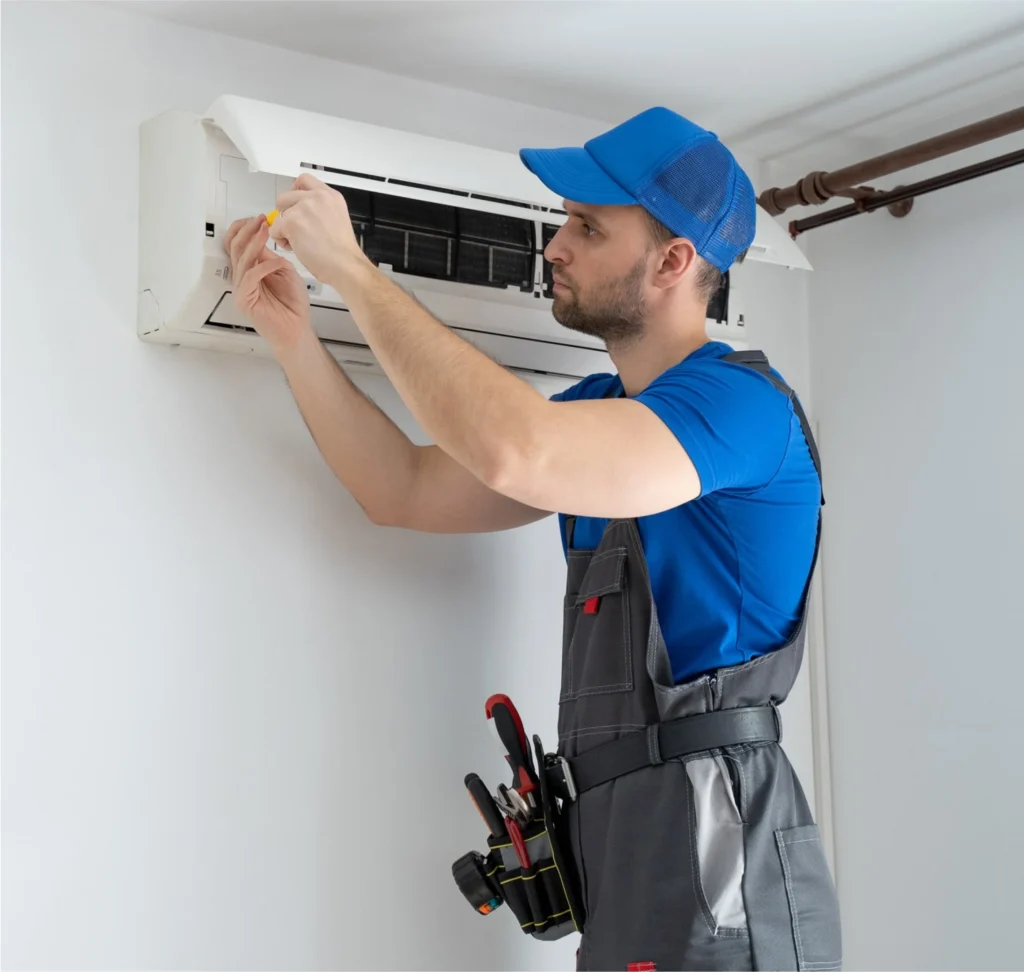
St. Charles’s middle band, the 57.5% built between 1960 and 1999, is where most work happens, and it is usually work on a second furnace. Those units were fitted into a cabinet, a flue and a duct system designed for the first one, which is why a part that fits the model does not always fit the installation. The pre-1960 18.1% adds a masonry chimney to the same diagnosis, and the 24.4% built after 1999 is still mostly on original equipment.
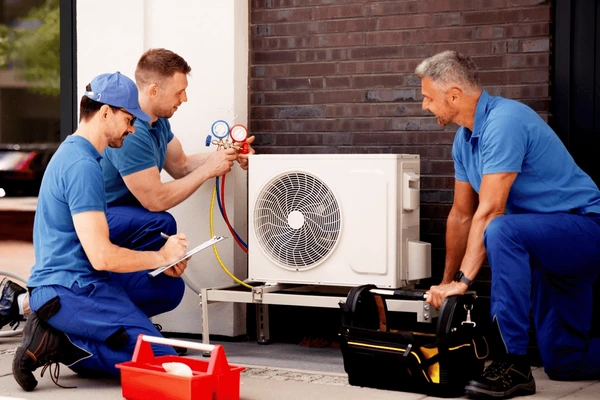
For a furnace that lights and drops out, or runs and never satisfies the thermostat, the place to start is what a heating repair visit tests and in what order. That page walks the sequence from the call for heat through the inducer, the proof of draft, ignition and the blower, which is how a St. Charles furnace is diagnosed rather than guessed at. A sensor fault on a sound cabinet is a repair; a cracked heat exchanger on a third furnace in a 1960s cabinet is a different conversation.
When the cabinet is sound but the unit has reached the end of its life, what a furnace replacement involves covers sizing, venting and the 80% versus condensing decision, including what a chimney or a metal flue requires in the older parts of the city. Summer work follows the same logic from the other side: air conditioning services begin with charge and airflow rather than a parts list, and a water heater past its service life is the third appliance in these houses to go, which is why water heater replacement comes up on the same visits.
Where nothing is broken yet, furnace maintenance is the cheaper route: a measured temperature rise, a cleaned flame sensor and a filter that is not loaded.
Call (630) 467-6249
Why homeowners in St. Charles choose a diagnostic-first visit
In a city where most houses have already had one furnace replaced, the install date and the house date are two different numbers, and the difference is where guesses go wrong. A 1984 house with a 2004 furnace is a different diagnosis from a 2004 house with its original unit, even though the equipment may be identical. The visit is ordered accordingly: gas pressure and flame signal, then draft and venting, then airflow and temperature rise, with the flue or chimney read as part of the venting step rather than as an afterthought. The finding is written down with the repair and the replacement option, and nothing is replaced before the temperature rise is measured again. That is also why the estimate is written after the readings rather than before them, and why a replacement recommendation without a heat-exchanger inspection is unfinished.
Why this winter is the time to look at a St. Charles furnace
- The median St. Charles house was built in 1984. A furnace installed when that house was new is now 42 years old, and the replacement fitted in the 1990s or 2000s is at the 15 to 20 year expectation as well.
- 57.5% of the city's housing went up between 1960 and 1999, which is where the second furnace is now the one being replaced, in a cabinet sized for the first.
- 84.8% of homes burn utility gas, so a January failure is a gas-train failure far more often than anything else, and the parts that fail first are ignition and draft components.
- 18.1% of the stock predates 1960, so a fifth of St. Charles furnaces sit on a metal flue or a masonry chimney that has to be part of the diagnosis rather than an afterthought.
- A furnace short-cycling on a restricted filter or a failing blower runs hot. Heat is what kills blower motors and warps limit switches, so the cheap repair now is the expensive one later.
What a heating visit covers
- The rating plate is read first: model, serial, input rating and manufacture date.
- Gas pressure and flame signal are measured at the valve and the flame sensor.
- Draft is proved at the inducer and the flue, including the chimney or termination.
- Airflow is checked at the filter, the blower and the temperature rise across the heat exchanger.
- The finding is put in plain language, with the repair and the replacement option written down and the temperature rise measured again before the visit ends.
Common questions from St. Charles homeowners
How old is the typical furnace in St. Charles?
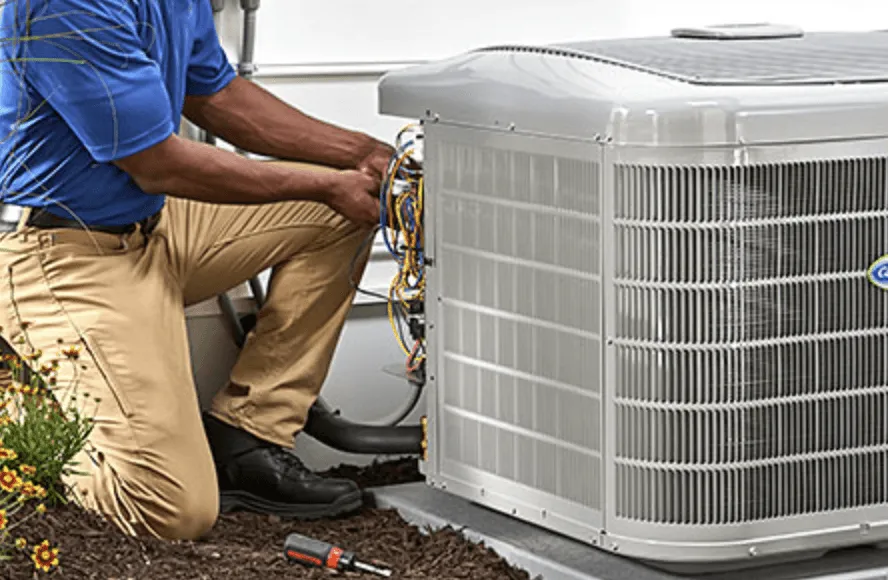
Usually a second unit, and often a third. With a median year built of 1984 and 57.5% of homes built between 1960 and 1999, most St. Charles furnaces are replacements rather than originals, so the plate date is the only reliable age. A gas furnace is expected to run 15 to 20 years, which puts equipment fitted in the 1990s and 2000s at the end of that window now.
Does St. Charles’s elevation affect a gas furnace?
No. St. Charles sits at 755.9 feet, and furnace installation instructions rate the appliance at nameplate input up to 2,000 feet, with a reduced input rating required above that line. At 756 feet the factory orifice is correct and no high-altitude kit is needed. Elevation is not why a St. Charles furnace fails; the flame signal, the draft proof and the airflow are.
Which county is St. Charles in?
Both DuPage and Kane. The Census place-by-county relationship file lists St. Charles in each, and the boundary runs through the city rather than around it, so which county holds a record depends on the address. That matters for property records and for a permit history, not for the heating system itself.
Does a furnace replacement in St. Charles need a permit?
That is settled by the city, not by the contractor, and it is worth asking before the unit is ordered. The answer can turn on whether the job is a like-for-like swap in the same cabinet or a change of venting, fuel or electrical circuit, and in the pre-1960 fifth a chimney decision usually enters the same conversation. Ask the city what the job needs and keep the answer with the invoice; the model and serial off the rating plate are what an application will ask for.
What is the most common HVAC repair in St. Charles?
Ignition and flame sensing on a second or third furnace, plus the airflow faults that follow a replacement into an older duct system. The pattern follows the housing: the 1960 to 1999 half fails at the sensor, the igniter or the inducer, while the pre-1960 fifth fails at the vent and the blower as often as at the burner. A measured flame signal and a temperature rise separate those cases before any part is chosen.
How long should a gas furnace last?
Fifteen to twenty years is the normal expectation for a gas furnace, and the number that matters more is the one in front of you: a unit that has been short-cycling on a loaded filter or running with a restricted duct system will not reach the top of that range. In a St. Charles house on its second or third furnace, the plate date plus the temperature rise tell you more about remaining life than the year the house was built.
Repair or replace in St. Charles
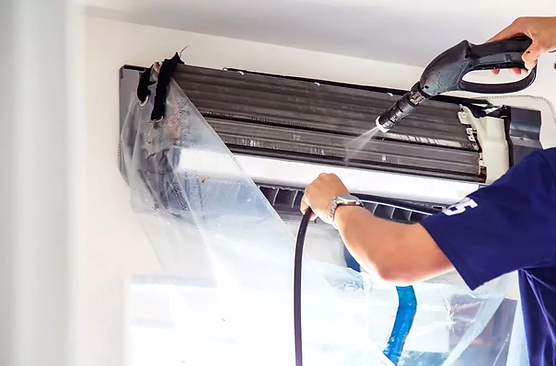
St. Charles’s decision is usually about the third furnace in a cabinet built for the first. Replacing like for like keeps the footprint and the flue, which is why so many of these houses are on their second unit rather than a modern one. Moving to a condensing furnace in the pre-1960 fifth means deciding what happens to the chimney or the metal liner, and in the 1960 to 1999 half it means checking that the existing vent can take a PVC termination. Two tests settle the appliance: the heat exchanger is checked for cracks, and static pressure is measured to see whether the original ductwork can move the air a new unit needs. If both are sound and the fault is one sensor or igniter, repair is the honest answer.
St. Charles, IL - served from the Aurora shop
Next step: book a heating visit in St. Charles
Call (630) 467-6249
Tell us the city, the fuel and the symptom.
Have the rating plate ready
Model, serial and input rating identify the age and the parts.
Say what the vent is
A chimney, a metal flue or a PVC termination changes the job.
What the visit produces
A measured finding, the repair option and the replacement option, written before work starts.
Where we come from
HVAC Repair Aurora, 2847 Stonebridge Ct, Aurora, IL 60502.
After the visit
The finding is in writing, and repair is booked only if you approve it.