AC short cycling is when your air conditioner turns on and off every few minutes instead of running a normal 10-to-20-minute cycle. It’s a problem because those rapid restarts wear out the compressor — the most expensive part — while driving up energy bills and leaving your Aurora home warm and humid. The related “3-minute rule” is different: it’s the short delay (about 3 minutes) an AC should wait before restarting, so the compressor’s internal pressure can equalize. If your system is cycling far more often than a normal run, something is wrong. Here’s what causes it, what you can safely fix yourself, and when to call a pro.
If your AC clicks on, runs for a couple of minutes, shuts off, and starts again a few minutes later — over and over — you’re watching short cycling in action. It’s one of the most misunderstood AC problems (the definitions online genuinely conflict), so let’s clear it up and get your system running the way it should.
What Is the 3-Minute Rule?
The 3-minute rule is a protection, not a problem. When your air conditioner’s compressor shuts off, the high-pressure and low-pressure refrigerant inside need a moment to equalize. If the compressor tries to restart against that pressure too soon, it can strain or damage itself.
So the rule of thumb: an AC should wait about three minutes after shutting off before it kicks back on. Most modern thermostats and systems build in a three-to-five-minute delay automatically. If you turn your thermostat off and back on and the outdoor unit doesn’t restart immediately, that’s usually the delay doing its job — not a fault.
Short cycling is what happens when that healthy rhythm breaks down and the system starts running in rapid, incomplete bursts.
What Counts as Short Cycling?
A healthy central AC runs a full cycle of roughly 10 to 20 minutes, kicking on about two to three times an hour on a warm day. That’s long enough to cool the air and pull humidity out of it.
You’re short cycling if:
- The system runs for only a few minutes before shutting off.
- It restarts frequently — far more than a few times an hour.
- Rooms never feel evenly or reliably cool.
- Your energy bill creeps up for no obvious reason.
- The unit sounds like it’s constantly starting up.
On a humid Fox Valley afternoon, short cycling often shows up as a house that reads 72 on the thermostat but still feels sticky — because the system never runs long enough to dehumidify.
Why Short Cycling Is Bad for Your AC
It’s not just annoying — it’s genuinely hard on the system:
- Compressor wear. Every startup is the hardest moment for a compressor. Constant restarts shorten its life, and a failed compressor is often the point where replacing the whole unit makes more sense.
- Higher energy bills. Frequent startups draw the most power, so short cycling quietly runs up your electric bill.
- Poor comfort and humidity control. Without full cycles, the system can’t remove moisture, leaving your home warm and clammy no matter the thermostat setting.
DIY Fixes to Try First
Some causes of short cycling are simple. Start here, easiest first:
- Replace the air filter. A clogged filter starves the system of airflow, causing it to overheat and shut down early. In the dusty, pollen-heavy Fox Valley season, check it monthly during heavy use.
- Check the thermostat placement and batteries. A thermostat in direct sun, near a supply vent, or by a drafty spot misreads the room and cycles the system erratically. Replace the batteries, and make sure it isn’t getting a false temperature reading.
- Look for a frozen coil. Ice on the indoor coil or refrigerant lines stops cooling and trips the system off. Turn the AC off and let the ice fully thaw, then replace the filter and restart. (This overlaps with the causes behind an AC blowing warm air, so that guide is worth a look too.)
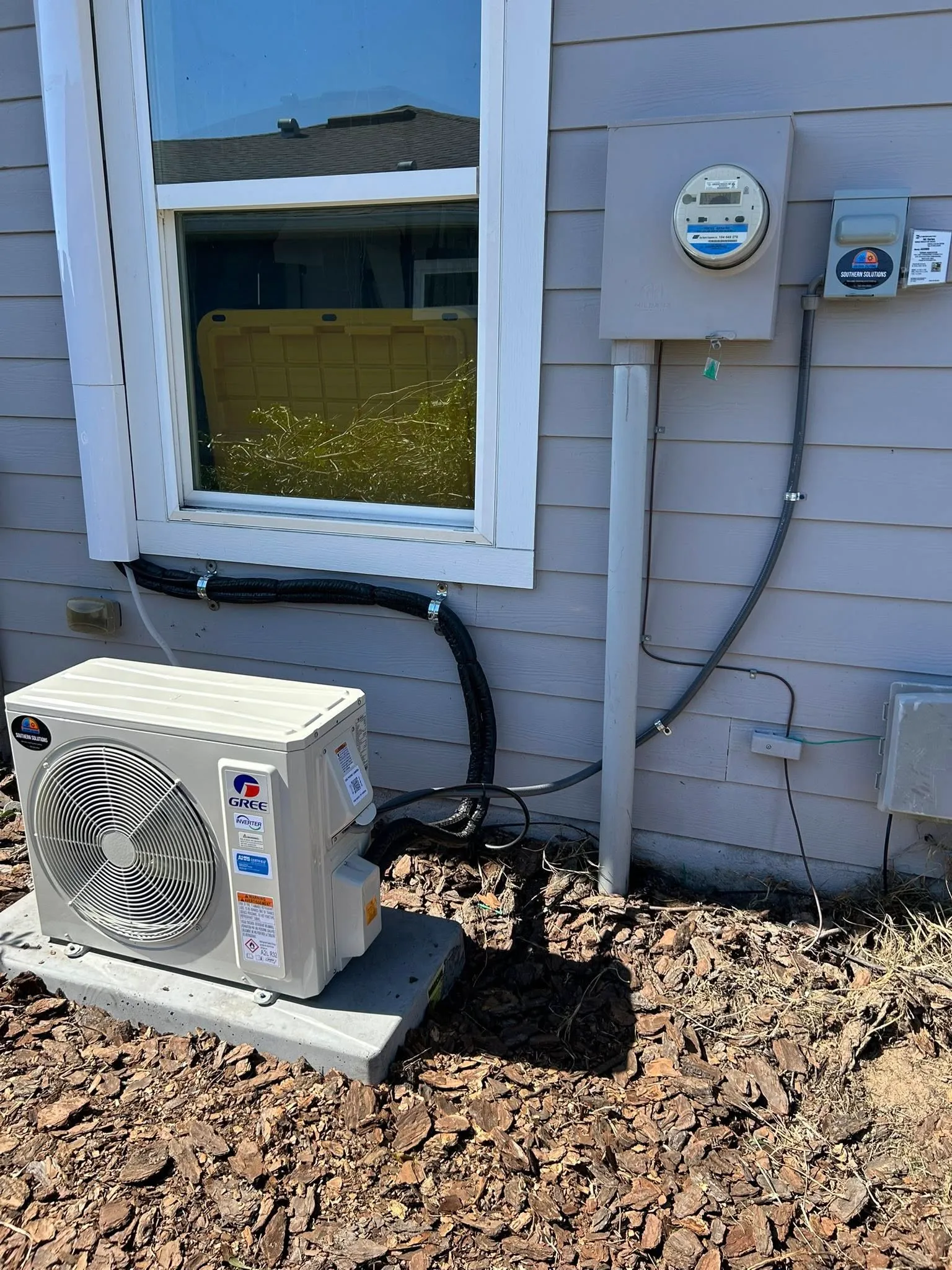
- Clear the outdoor condenser. Grass clippings, cottonwood fluff, and leaves choke the outdoor unit’s airflow. With the power off, clear debris and trim plants back about two feet.
If a clean filter and clear coils don’t restore normal cycles, the cause is internal — and that’s a pro job.
When It’s a Pro Job
If short cycling continues after the basics, one of these is usually behind it, and none is DIY:
- Low refrigerant (a leak). Low charge causes erratic pressure that trips the compressor off early. Refrigerant is sealed — low means a leak that must be found and repaired, which requires EPA Section 608 certification, not just a “top off.”
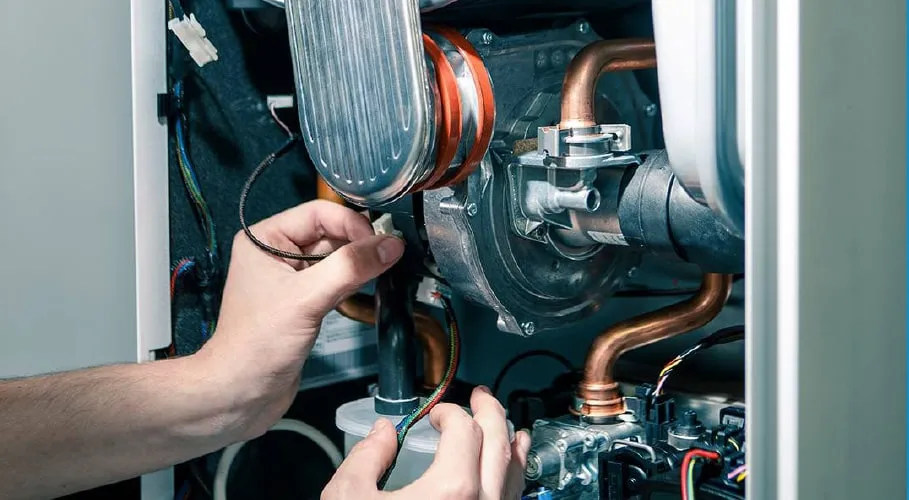
- A failing capacitor or contactor. These electrical parts start and run the compressor; when they weaken, the system can cut out and restart repeatedly.
- Faulty wiring or controls. Loose connections and bad control boards send erratic signals.
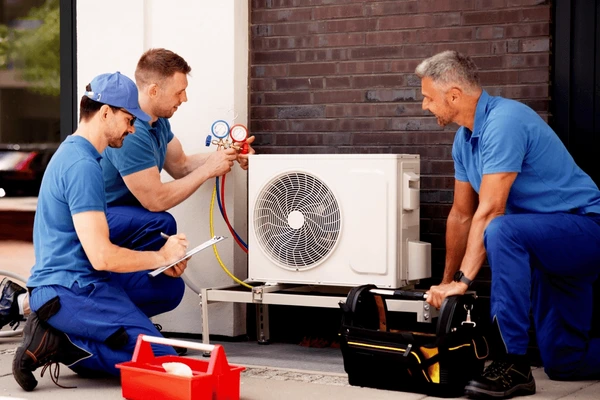
Continuous short cycling will damage the compressor over time, so don’t let it run for weeks while you wait. If you’re seeing it alongside other red flags, our guide to the 7 signs your AC needs repair can help you gauge urgency — and a proper AC repair diagnosis will pinpoint the exact cause.
The Oversized-AC Problem in Newer Aurora Homes
Here’s the cause most guides mention but never explain — and it’s the one we see most in the Fox Valley: an oversized air conditioner short-cycles by design.
If your AC is too large for your home, it blasts the space cold in just a few minutes, hits the thermostat setting, and shuts off — before it has run long enough to pull the humidity out of the air. Then the temperature drifts up, it kicks on again, and the cycle repeats. The result is a home that’s cold but clammy, higher bills, and a system wearing itself out.
This is especially common in the newer subdivisions toward Naperville, Oswego, and Plainfield, where builder-grade units were frequently sized “big to be safe.” The hard truth: you can’t fix an oversized unit with a part. No capacitor or refrigerant charge makes an over-large system cycle correctly. The real solution is a right-sized system, matched to your home with a proper load calculation — which is exactly what a correct AC installation is about. And keeping any system tuned with regular AC maintenance prevents the airflow and charge issues that cause short cycling in the first place.
What Does It Cost to Fix?
It depends entirely on the cause. A new filter or a thermostat battery is a few dollars. A capacitor or a refrigerant repair runs into the hundreds, and a compressor or a full resize is a bigger investment. For realistic 2026 price ranges by repair type in the Fox Valley, see our AC repair cost guide for Aurora. Whatever the cause, insist on a written estimate before any work begins.
Frequently Asked Questions
What is the 3-minute rule for air conditioners?
It’s the short delay — about three minutes — an AC should wait after shutting off before it restarts, so the compressor’s internal refrigerant pressure can equalize. Restarting too soon can damage the compressor, which is why many modern thermostats build in a three-to-five-minute delay automatically.
What is considered short cycling for an AC unit?
A healthy central AC runs a full cycle of about 10 to 20 minutes, two to three times an hour. Short cycling is when it runs only a few minutes before shutting off and then restarts frequently, never completing a full cooling cycle.
Is short cycling bad for an AC unit?
Yes. The rapid, repeated startups are the hardest moment for the compressor and shorten its life, waste electricity, and prevent the system from removing humidity — leaving your home warm and sticky. Left unaddressed, it can lead to compressor failure.
What would cause an AC compressor to short cycle?
Common causes include low refrigerant from a leak, a weak capacitor or contactor, a clogged filter or frozen coil restricting airflow, a misreading thermostat, or an oversized unit that cools too fast. The airflow and thermostat issues are often DIY; the electrical, refrigerant, and sizing causes need a technician.
How do I stop my AC from short cycling?
Start with the basics: replace the air filter, check the thermostat’s placement and batteries, thaw any frozen coil, and clear the outdoor unit. If those don’t fix it, the cause is usually internal (refrigerant, electrical) or a sizing problem — both of which need a licensed technician to diagnose.
Stop the Cycle — Get a Diagnosis in Aurora
If your AC keeps short cycling after the simple checks, don’t let it grind down the compressor. HVAC Repair Aurora is a cooling-focused, NATE-certified team serving Aurora, IL and the Fox Valley since 2010 — we find the real cause (including honest guidance when the answer is a right-sized system, not a part), and quote it in writing first. Call or see our AC repair and services.