
Furnace Installation in Aurora, IL
A furnace replacement is usually decided by a number nobody wants to see: the third repair in three winters, a heat exchanger that has cracked, or a cabinet that has reached twenty-five years. The decision is the easy part. What decides whether the next twenty years are quiet is what happens before the new furnace is ordered - the load calculation, the ductwork, the venting, and whether the coil above it matches. We install and replace gas furnaces in Aurora and explain those choices before anything is ordered. Call (630) 467-6249.
Why Choose Us for Furnace Installation in Aurora
Sized from a load calculation, not from the old label
The furnace in the basement was sized for the house as it was built, not for the windows, insulation and ductwork it has now. We calculate the heat load rather than copying the old input rating, because an oversized furnace short-cycles, runs noisy and wears out the parts that were meant to last.
The ductwork is part of the decision
A furnace can only deliver what the ducts can carry. Static pressure and the return path are checked before a replacement is chosen, because a bigger furnace on undersized ductwork is louder, hotter and less comfortable than the one it replaced.
The coil and the outdoor unit are considered
If the air conditioner stays, the evaporator coil has to match the new furnace and the refrigerant lines have to be handled properly. Replacing a furnace without looking at what sits on top of it is how mismatched systems and leaks happen.
Commissioned, not just switched on
A new furnace is set up: gas pressure, temperature rise, blower speed, combustion analysis and a full cycle. The readings are part of the handover, along with the filter size and the settings.
FURNACE INSTALLATION IN AURORA
Why Now: Replacing a Furnace Before the Cold Sets In
The January normal low at Chicago Aurora Municipal Airport is 12.6 F (NOAA 1981-2010 normals, Illinois State Water Survey), and a furnace that fails in that weather is not just uncomfortable. A house that loses heat for a night puts the plumbing at risk, and an emergency replacement happens with whatever unit can be found, often reusing the old venting because there is no time to change it. That is how a new furnace inherits the problem that ended the old one.
A planned replacement is a different job. The load can be calculated, the ductwork measured, the venting route chosen and the coil matched, and the work can be scheduled before the season. A furnace at twenty years with a cracked heat exchanger, or one that has needed a repair every winter, is already telling you the decision is due. Waiting does not make it cheaper; it makes the choice smaller.
The furnace is 20 to 25 years old
Most gas furnaces are expected to run 15 to 20 years. At 25 the cabinet is past its service life, parts get scarce, and the heat exchanger has had a long time to crack.
- Manufacture date over 20 years
- Parts on back order
- Several repairs in recent winters
- Efficiency noticeably lower
A heat exchanger has failed
A cracked or perforated heat exchanger is a carbon monoxide risk and not a part that gets patched. That finding ends the repair conversation immediately.
- Crack visible in the exchanger
- Combustion test out of range
- Soot or corrosion inside
- CO alarm has sounded
The third repair in three winters
One repair is normal. A pattern of repairs on the same cabinet means the remaining life is being paid for one part at a time, and the next failure is already inside.
- Igniter and sensor replaced
- Inducer replaced
- Board or valve replaced
- Same symptom returns
Rooms that never get warm
A furnace that runs constantly while some rooms stay cold is often undersized, oversized, or fighting ductwork that cannot deliver the air. A replacement is the point to correct it.
- Cold rooms far from the furnace
- Long run times
- Noisy registers
- Temperature swings between rooms
Rising gas use for the same comfort
A furnace that burns more for the same result is losing efficiency, usually through a failing inducer, a dirty exchanger or an aging burner. It is worth measuring rather than assuming.
- Higher bills than last winter
- Longer cycles
- Yellow rather than blue flame
- Dusty burners
A furnace that no longer fits the house
Additions, finished basements, new windows and added insulation all change the load. A furnace sized for the original house can be wrong for the one you live in now.
- Addition or finished basement
- New windows or insulation
- Ductwork extended
- Zoning added
Proof: What Furnace Installation Covers in an Aurora Home
Load Calculation and Sizing
Why the square footage is only the start
Sizing a furnace is a heat loss calculation, not a guess based on floor area. The load depends on insulation, window area and glazing, air leakage, duct location, ceiling height and how the house is oriented, and it is expressed in the heat the building loses on the coldest day it is designed for. An oversized furnace heats the house faster than the ducts can distribute the air, so it short-cycles, runs louder, wears the igniter and inducer faster and leaves uneven temperatures. An undersized one runs continuously and never quite catches up. The old furnace's input rating tells you what was installed, which is not the same as what the house needs now. A short cycle also leaves the far rooms cold, which is the complaint that usually starts the conversation.
Why it matters
The wrong size is the most expensive mistake in a furnace replacement, and it is invisible on the invoice.
What it helps you decide
It tells you whether the existing furnace was right in the first place, and what the ductwork can actually deliver.
Do this now
Have the age of the windows and any additions ready; they change the calculation.
Efficiency Ratings and Venting
What 80 versus 96 percent changes in the house
An 80% furnace sends most of its heat into the house and the rest up a metal flue, and it needs a chimney that drafts. A condensing furnace recovers more heat by cooling the exhaust until water condenses out, which is why it vents through PVC pipe and produces condensate that must drain to a safe place. The efficiency difference is real, and so is the installation difference: a condensing unit needs a vent route to an outside wall, a slope back to the unit, a trap and a drain, and a termination that will not ice over in an Aurora winter. Sometimes the house makes the choice for you. Where the chimney is shared, an 80% furnace may be the simpler answer; where an outside wall is close, condensing is straightforward.
Why it matters
The wrong venting for the chosen furnace is a safety problem, not a performance one.
What it helps you decide
It tells you which furnace the house can accept, and what the venting work involves.
Do this now
Note where the existing flue runs and whether an outside wall is nearby.
The Coil, the AC and a Matched System
What sits above the furnace matters
Most Aurora homes have an evaporator coil sitting on top of the furnace, and the two have to match in airflow and in physical size. A new furnace with an old, restricted coil will not deliver its rated airflow, and a coil that is not matched to the outdoor unit can lose capacity or ice up. If the air conditioner is near the end of its life, doing both at once avoids paying twice for the same labour and the same refrigerant work. If it is healthy, the coil still has to be checked, cleaned and mated properly to the new cabinet. If the coil is old, restricted or the wrong tonnage for the outdoor unit, no furnace setting will fix the airflow, and the cost of ignoring it shows up as an air conditioner that cannot keep up in July.
Why it matters
A mismatched coil turns a good furnace into an average one and can shorten the compressor's life.
What it helps you decide
It tells you whether to replace the coil now, keep it, or plan the outdoor unit as well.
Do this now
Note the age of the air conditioner and whether it has needed refrigerant.
Removal, Gas, Electrical and Commissioning
The work that decides whether the install holds up
A furnace replacement is a gas appliance change, not a cabinet swap. The gas line is sized and tested, the electrical supply and the low-voltage wiring are checked, the condensate is routed, the flue is sealed and supported, and the new unit is set up on site: manifold pressure, temperature rise, blower speed and combustion analysis. The old furnace is removed and disposed of, and the filter size and settings are handed over. Commissioning is where a correct install is proved, and it is the step a rushed job skips. On a condensing furnace the condensate trap and drain are proved, the vent is checked for slope and support, and the temperature rise is compared with the data plate. Those readings are what a warranty claim rests on if something fails in the first season.
Why it matters
A furnace that is installed but not commissioned is a guess with a warranty attached.
What it helps you decide
It shows what the install includes beyond the box, before the work starts.
Do this now
Ask what commissioning readings you will be given at handover.
The Scenario Where Bigger Is Not Warmer
Here is the replacement that goes wrong in the first cold week. The old furnace never kept the house comfortable, so the logical conclusion is that it was too small. The replacement goes in one size larger, and the first cold snap proves the opposite: the house heats quickly, the furnace shuts down, the blower keeps running, and the rooms at the far end are still cool. The furnace is not the problem. The ductwork cannot move the air the larger unit produces, so the limit switch trips and the cycle shortens.
The same thing happens when a furnace is oversized without any duct change at all: the temperature rise across the exchanger climbs, the cabinet gets hot, and the parts that were supposed to last fifteen years work harder every cycle. The fix is not another size up or down. It is a load calculation and a look at static pressure and the return path, which is what should have happened before the order.
In an Aurora house with a finished basement, new windows or an addition, the right answer is often the same size as the old furnace with better ductwork, or a slightly smaller unit with a corrected return. If your last furnace never kept up, describe the house and the cold rooms when you call (630) 467-6249, and the sizing conversation starts there.
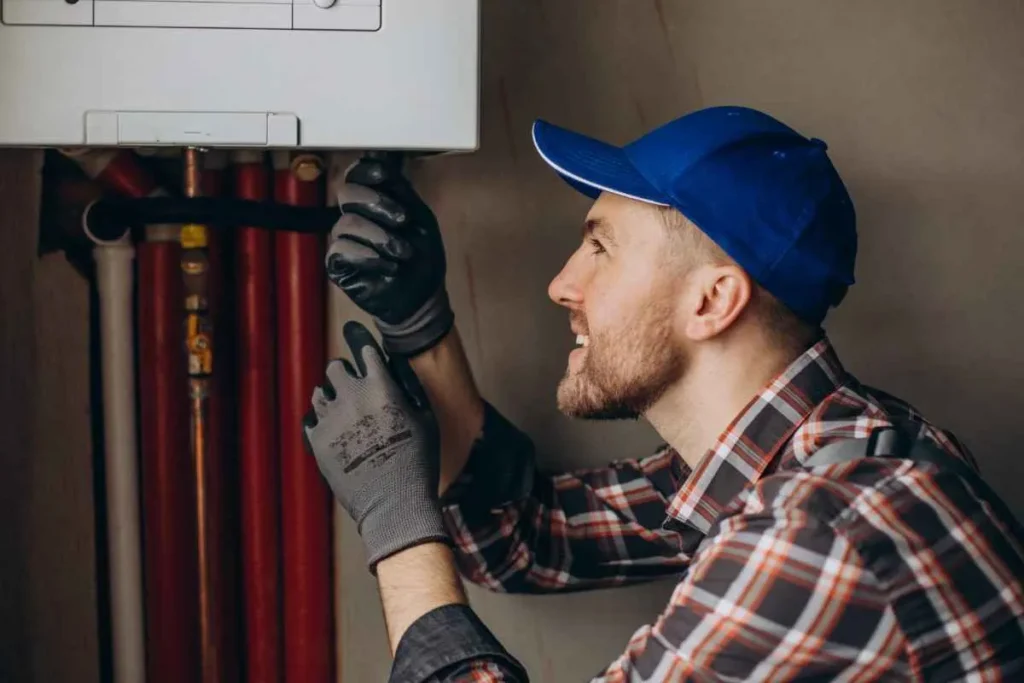
REPAIR OR REPLACE
The Line Between Another Furnace Repair and a Replacement
Furnace age matters, but condition decides. A twelve-year-old furnace with a failed igniter is a repair. The same furnace at twenty-two with a cracked heat exchanger is finished regardless of what the part costs. We look at the exchanger, the inducer, the blower and the ductwork before recommending anything, and we say plainly when a repair is buying months rather than years.
The framework we use
Under ten years with one failed component: repair. Ten to fifteen years: weigh the part against the heat exchanger and blower. Over fifteen years with a major failure: replace. At twenty-five years: replace whatever the fault is.
Under ten years
An igniter, flame sensor, pressure switch or capacitor is worth replacing. The cabinet has most of its service life left.
Ten to fifteen years
The deciding questions are the heat exchanger and the inducer. If either is failing, a repair buys a season rather than years.
Over fifteen years with a major part
A gas valve, control board or blower motor on a cabinet this old is money spent on a furnace that is close to the end.
A failed heat exchanger
Replace it. A cracked exchanger is a carbon monoxide risk, and it is not a part that gets patched.
The house has changed around it
An addition, a finished basement or new windows can leave a sound furnace the wrong size for the house. That is a load calculation, not a repair.
How Furnace Installation Works, Step by Step
A furnace replacement is decided over weeks and installed over a day. Here is what happens from the first survey to the handover.
HOW WE WORK
You Will Know the Size and the Venting Before the Order
A furnace installation goes wrong quietly: the wrong size, the old venting reused, a coil that does not match, a unit that is never commissioned. Ours starts with a load calculation and a look at the ductwork, and the scope you agree is the scope that gets done. If the house needs something the quote did not cover, the work stops and you hear why before it continues.
Load calculation shared
The size is explained from the heat loss, not from the old label or a rule of thumb.
Ductwork reported
Static pressure and return capacity are discussed before a size is chosen.
Scope in writing
Furnace, venting, coil work, removal, disposal and commissioning listed before the day.
Commissioning readings
Gas pressure, temperature rise and combustion results given at handover.
What Sets Us Apart on a Furnace Installation
The difference on a furnace installation is not the badge on the cabinet. It is whether anyone calculated the load and looked at the ductwork before choosing a size, and whether the venting and the coil were treated as part of the system. We survey, calculate and put the scope in writing, because an oversized furnace on undersized ducts is a comfort problem that no warranty fixes. That is also why some of our calls end with the same size and better ductwork rather than a bigger box.
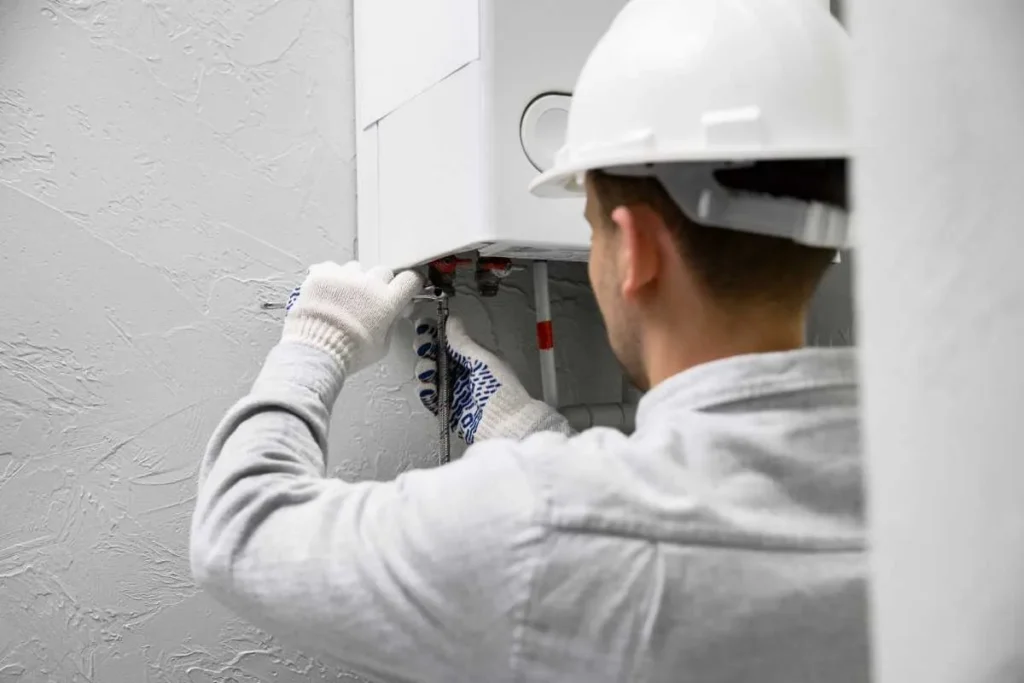
WHAT A PROPER INSTALL LEAVES YOU WITH
More Than a New Cabinet in the Basement
A furnace installation is finished when the unit is commissioned, the readings are in range and the house heats evenly. Here is what that looks like in practice.
The right size for the load
Chosen from a heat loss calculation and checked against what the ductwork can deliver.
Venting that suits the furnace
Flue or PVC route, slope, termination and condensate drain completed and proved.
Gas and electrical verified
Line sized and tested, electrical supply and low-voltage wiring checked.
A matched coil
The evaporator coil checked, cleaned or replaced so airflow matches the new furnace.
Commissioned with readings
Manifold pressure, temperature rise, blower speed and combustion analysis recorded at handover.
Old unit removed
Drained, disconnected, removed and disposed of, with the area left clear.
Ready to Replace a Furnace in Aurora?
If the furnace is past twenty years, has had a repair every winter, or has been found with a cracked heat exchanger, call and describe it. We will arrange a survey, explain the size and venting the house needs, and put the scope in writing. If a carbon monoxide alarm has sounded, leave the house and call emergency services first.
Furnace Installation Across Aurora and the Fox Valley
Service area: Aurora, Naperville, North Aurora, Montgomery, Oswego, Batavia, Geneva, Sugar Grove, Elburn, St. Charles, Warrenville, Lisle, Plainfield, Joliet, Bolingbrook, Downers Grove, Wheaton, Carol Stream, West Chicago, Winfield and Yorkville.
The housing stock changes what a furnace replacement involves. Older homes near downtown Aurora and North Aurora often have an atmospheric furnace on a chimney, where the venting decision is the whole job. Newer subdivisions on the west side tend to have high-efficiency furnaces with PVC venting, where the replacement has to match an existing vent route, condensate path and coil. HVAC Repair Aurora works out of 2847 Stonebridge Ct, and knowing which of those you live in decides half the survey before we arrive.

Frequently Asked Questions
The total depends on the furnace, the venting work, the coil, the ductwork and the access, not on the cabinet alone. A like-for-like replacement in an open basement with existing venting is the simplest version. A switch to a condensing furnace, a new vent route, a coil replacement or duct corrections all change the work. We put the scope in writing so the number you agree covers the job described.
It is a repair-versus-replace shortcut, not a price. Multiply the age of the equipment by the cost of the repair. If the result passes the threshold the rule is named for, replacement usually deserves the conversation; below it, a repair is often the better use of the money. Heat exchanger condition, parts availability and how long you plan to stay in the house matter more than the arithmetic.
It is a gas appliance with a venting system, a combustion process and a heat exchanger, and the parts that go wrong are the parts you cannot see. Gas connections must be sized and tested, the venting must be correct for the furnace category, the condensate has to drain, and the unit has to be commissioned with combustion analysis. Most manufacturers also tie the warranty to professional installation.
Square footage is only the starting point. A 2000 square foot house with new windows and a finished basement can need a different size from the same footprint with original glazing and an uninsulated crawl space. The load calculation decides the size, and the venting, coil and ductwork decide the rest of the work. That is why we calculate rather than quote from floor area.
Yes, and often that is the right call. The evaporator coil above the furnace still has to be checked, cleaned and matched to the new cabinet, and the refrigerant lines have to be handled properly. If the outdoor unit is near the end of its life, replacing both at once avoids paying twice for the same labour. If it is healthy, the furnace can be replaced on its own.
Yes, in almost every case. At 25 years the furnace is past its expected service life, parts get harder to find, and the heat exchanger has had a long time to crack. A repair can still get you through a cold snap, but it is money spent on borrowed time. The exception is a furnace that has been serviced every year and is in genuinely good condition, which is rare at that age.