
Water Heater Repair in Aurora, IL
Hot water fails at the worst possible moment. It is usually a Monday morning: the shower runs cold after two minutes, or there is a dark ring spreading out from the base of the tank across the basement floor. A water heater gives very little warning, and in an Aurora house the tank often sits in a basement or garage where a slow leak has been running for days before anyone looks. We diagnose gas, electric, tank and tankless water heaters in Aurora, trace the fault to its source, and separate a repair from a replacement before anything is ordered. Call (630) 467-6249.
Why Choose Us for Water Heater Repair in Aurora
We trace the water before we condemn the tank
A wet floor is not proof that the tank has failed. The leak can come from the relief valve, a corroded nipple, the drain valve, or condensation running down a flue connector. We find where the water starts, because the difference between a fitting and a tank decides the whole conversation.
Age decides the argument, not a sales script
A tank under eight years old with one failed part is usually worth repairing. At ten years or more, or with a leaking tank or a failed gas control valve, replacement is the honest answer. We read the manufacture date off the serial plate and tell you which side of that line your heater is on.
Safety parts are tested, not skipped
The temperature and pressure relief valve, the flue, combustion air and the drain pan are the parts that stop a bad day becoming a dangerous one. They are checked on every repair call, including the calls that started as a complaint about lukewarm water.
One technician, one explanation
The person who diagnoses your heater is the person who explains what failed and what the repair involves, in plain language, before a part is ordered. If a question comes up a week later, you call the same number and reach someone who has seen the unit.
WATER HEATER REPAIR IN AURORA
Why Now: What an Aurora Winter Does to a Water Heater
The January normal low at Chicago Aurora Municipal Airport is 12.6 F (NOAA 1981-2010 normals, Illinois State Water Survey), and a tank standing in an unheated garage or a drafty basement works harder in that weather than at any other time of year. Cold inlet water has to be heated further, recovery takes longer, and every fitting on the tank moves with the temperature. That is also when a leak does the most damage: a drip into a basement nobody visits becomes wet framing, ruined storage and a mould problem long before it is found.
Waiting changes the repair as well. A failed thermocouple, element or thermostat is a small job. A tank that has been leaking into its own insulation, or a gas control valve that has been sitting in water, is not worth repairing at any sensible cost. Sediment makes it worse every month: minerals settle out of the water, bake onto the burner plate or the elements, and the heater runs longer, rumbles and wears out faster. The earlier the fault is found, the more of the heater is still worth saving.
No hot water at all
The tap runs cold and the tank is silent. On gas, the pilot or the electronic ignition has failed; on electric, an element, a breaker or a high-limit trip is the usual cause.
- Pilot will not stay lit
- No sound from the burner
- Breaker tripped
- Blown element
Water on the floor
Water under a tank can come from the tank itself, the relief valve, the drain valve or a corroded nipple. Where it starts decides whether this is a fitting or a new heater.
- Rust at the base
- Relief valve discharge
- Leaking drain valve
- Condensation from the flue
Hot water runs out fast
The heater works but the tank empties quickly. A failed lower element, a sediment-loaded tank or a broken dip tube all leave you with what feels like half a tank.
- Only one element heating
- Sediment on the base
- Broken dip tube
- Thermostat out of calibration
Water is too hot, or the relief valve weeps
A stuck thermostat or a failed gas control can overheat a tank, and a weeping relief valve is a safety device doing its job rather than a nuisance to cap off.
- Scalding at the tap
- T&P valve dripping
- Rumbling or popping
- Breaker keeps tripping
Rusty or cloudy hot water
Rust-coloured hot water usually means the anode rod is spent and the tank lining is going. Cloudy water is often sediment stirred up, or air after a recent repair.
- Brown water from the hot side
- Metallic taste
- Sediment in the aerator
- Anode rod used up
The pilot or igniter keeps failing
A pilot that lights and then dies, or an igniter that clicks without lighting the burner, points to the thermocouple, the gas valve, the flame sensor or the venting.
- Pilot out overnight
- Clicking with no flame
- Draft down the flue
- Gas control fault
Proof: What Water Heater Repair Covers in an Aurora Home
Gas Valve, Thermocouple and Pilot Assembly
How a gas water heater stops making heat
On a standing-pilot gas heater, the thermocouple sits in the pilot flame and generates the small voltage that holds the gas valve open. When the flame is blown out, or the thermocouple tip is coated, that voltage collapses and the valve shuts - which is why the pilot lights, burns for a minute and then dies. Electronic ignition models replace the standing pilot with a spark or hot-surface igniter and a flame sensor, and the same logic applies: no proof of flame, no gas. A failed gas control valve produces an identical symptom but is a different repair. Testing thermocouple output, the pilot orifice and the valve in that order is what separates a small part from a control valve replacement, and it is not a guess.
Why it matters
A pilot that will not stay lit is a safety circuit working, not a heater being difficult. Replacing parts in hope is how a small repair becomes a gas valve.
What it helps you decide
The readings tell you whether you are paying for a thermocouple, an igniter or a gas control valve, and whether the tank is worth that repair at its age.
Do this now
If the pilot goes out overnight, stop relighting it and call (630) 467-6249.
Heating Elements, Thermostats and Dip Tube
Why an electric heater goes lukewarm rather than cold
An electric tank has two elements and two thermostats, and the upper element does most of the visible work: when it fails the tank goes lukewarm rather than cold, because the lower element still heats slowly. A failed lower element gives hot water that runs out fast. A broken dip tube is subtler still - cold water enters at the top instead of the bottom and mixes with the hot, so the tank behaves like half its size. Testing elements for continuity and resistance, checking both thermostats and confirming the dip tube are three separate steps, and each one points at a different part. Water quality matters here too: sediment insulates the lower element until it overheats and fails. Hard water speeds that up, which is why two elements in the same model can fail years apart.
Why it matters
Electric faults look identical at the tap and completely different with a meter on them. Guessing usually means buying an element and thermostat pair you did not need.
What it helps you decide
It tells you whether this is a part, a wiring fault, or a tank that has filled with sediment and is effectively smaller than its label says.
Do this now
Lukewarm water with the breaker still on is worth a meter test. Call (630) 467-6249.
Relief Valve, Anode Rod and Tank Corrosion
The parts that decide whether a tank is safe
The temperature and pressure relief valve is the last line of defence on a tank: it opens if temperature or pressure climbs past its rating, and it is meant to be tested, not capped. Behind it sits the anode rod, a sacrificial magnesium or aluminium rod that corrodes instead of the steel lining. In Fox Valley water it is often consumed within a few years, and once it is gone the lining starts to pit from the inside. A tank that weeps at the relief valve, smells of sulphur or shows rust at the base is telling you where it sits in that sequence. Age plus anode condition is the clearest signal a water heater gives, and it takes minutes to read.
Why it matters
A capped relief valve turns a pressure problem into a split tank, and an exhausted anode is the reason tanks leak at ten years rather than fifteen.
What it helps you decide
It is the difference between a repair that buys years and one that buys months, and it is read before any part is ordered.
Do this now
Never cap a weeping relief valve. Call (630) 467-6249 and describe what it is doing.
Venting, Combustion Air and Flue Condensation
Why the flue matters as much as the tank
A gas water heater draws combustion air from the room and sends exhaust up a flue, and both matter more in a tightly built modern Aurora house than in the houses these tanks were designed for. If the flue is blocked, undersized or shares a chimney with an appliance that has since been replaced, exhaust can spill instead of rising. A cold flue also condenses: water runs back down the connector and drips onto the tank, which reads as a leaking heater when the tank itself is sound. Checking draft, the connector, the chimney and the combustion air supply is part of every gas repair, not an optional extra, and it is the difference between fixing the heater and fixing the house.
Why it matters
Spillage is a carbon monoxide risk, and condensation from a badly vented flue is the most common false alarm we are called to.
What it helps you decide
It separates a failed tank from a venting problem that would have destroyed the replacement too.
Do this now
If you smell exhaust or a carbon monoxide alarm sounds, leave the house and call emergency services first.
The Scenario That Isn't a Failed Tank
Here is the call that costs people a water heater they did not need. The heater is about nine years old. There is water at the base, a rust-coloured stain down one side, and the owner has already been told elsewhere that the tank has failed. The water, though, is coming from above: the flue connector has been condensing, and the drip has been running down the side of the tank and pooling underneath it.
It happens more often in Aurora than most homeowners expect, because plenty of houses have had a high-efficiency furnace fitted in the last fifteen years while the water heater stayed on the old chimney. The furnace now vents through plastic pipe and no longer warms that flue, so the water heater’s exhaust meets a cold chimney, condenses and runs back. The tank is fine. The venting is not. A tank-only quote replaces a sound heater and leaves the cause in place, which is why the same stain appears on the new one within a season.
The fix is usually a liner, a correctly sized flue or a different venting arrangement, and it is decided by looking at the whole appliance group rather than the tank alone. On a repair call we check draft and the connector before we discuss a tank, because the cheapest repair is the one that treats the actual fault. If you have water at the base of a heater and a newer furnace nearby, describe both when you call (630) 467-6249. That one detail can save you a replacement.
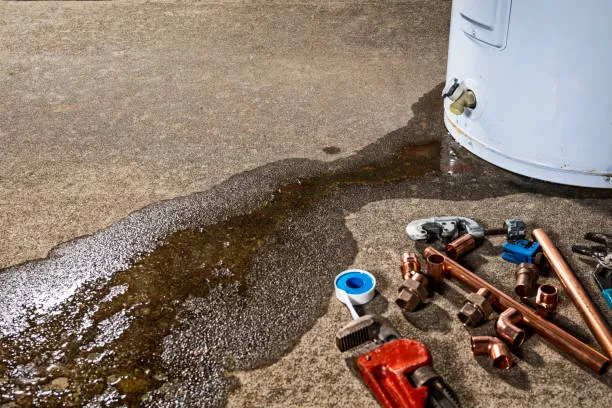
REPAIR OR REPLACE
A Water Heater Decision Based on Age, Not on Hope
Water heaters are the one appliance where age genuinely settles the argument. A six-year-old tank with a failed thermocouple or element is a repair. A twelve-year-old tank with the same fault is a different conversation, because the part will outlive the tank around it. We read the manufacture date from the serial number, look at the anode and the base, and give you a straight answer about which side of that line your heater is on – including when the answer is that a repair is not worth your money.
The framework we use
Under eight years with a single failed component: repair. Over ten years, or with a leaking tank, a failed gas control valve or a wet base: replace. Over twelve years: replace, whatever the fault is.
Under eight years
A thermocouple, element, thermostat or relief valve is worth replacing. The tank still has most of its service life ahead of it.
Eight to ten years
The deciding question is the anode rod and the tank base. If either is gone, a repair buys months rather than years.
Over ten years with a major fault
A leaking tank, a failed gas control valve or a rusted flue collar ends the repair conversation, because the next failure is already inside the steel.
Over twelve years
Replace regardless of the fault. Parts get scarce, the lining is thin, and the second failure usually arrives before the first repair is forgotten.
Water quality and household size
A large family, hard water or a tank that has never been flushed ages faster than the calendar suggests, and that moves the decision.
How Water Heater Repair Works, Step by Step
No two water heater calls are the same, but the sequence is. Here is what happens from the first call to the moment the tap runs hot again.
HOW WE WORK
You Will Know What Failed Before We Discuss a Tank
Water heater repair goes wrong when the tank is condemned before the leak is traced. Ours starts with the water: where it comes from, how old the tank is, and what the safety parts are doing. If the honest answer is that the heater is finished, you hear that with the reason attached rather than as a sales line.
Findings first
The diagnostic sequence comes before any recommendation, and normal readings are reported as normal.
Scope explained
If the repair changes once the heater is opened, we stop and explain before continuing.
Parts explained
You hear what the part does and why the old one failed, not just its name.
Clean work area
The floor is dried and the area left as we found it, including the water we brought out of the tank.
What Sets Us Apart on a Water Heater Call
On a water heater call the difference is rarely the truck or the brand on the door. It is whether the technician traces the water before quoting a tank, and whether the age of the unit is part of the recommendation or an afterthought. We test the gas or electrical side, the safety parts and the venting, then put the readings next to the manufacture date. That is what makes a second opinion useful rather than confusing, and it is why some of our calls end with a part and others end with an honest conversation about replacement.
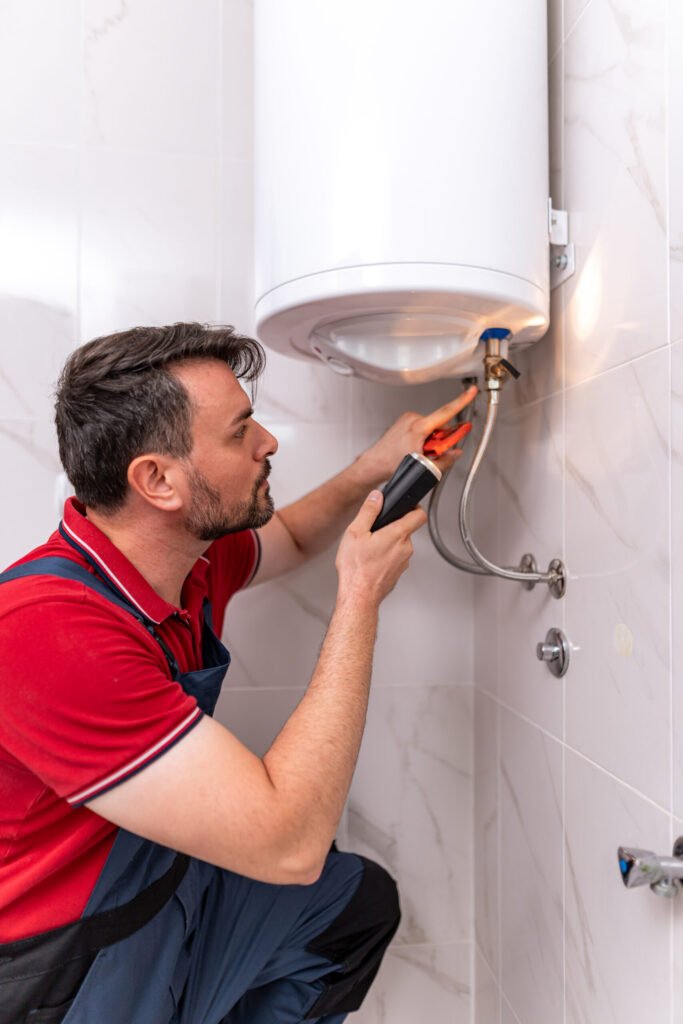
WHAT A PROPER REPAIR LEAVES YOU WITH
More Than Hot Water Coming Back
A repair is finished when the tank reaches temperature, every joint is dry, the safety parts have been tested and the flue is drawing. Here is what that looks like in practice.
Hot water at the right temperature
Measured at the tap, with the thermostat set to a safe delivery temperature.
No leak at any joint
Inlet, outlet, drain valve and relief valve discharge checked dry after the tank is back under pressure.
Relief valve tested
Opened and allowed to reseat, with the discharge line confirmed clear.
Flue and draft verified
Connector, chimney and combustion air checked, especially where a high-efficiency furnace shares the space.
Sediment and burner checked
The burner plate or elements inspected so the heater is not working against its own scale.
A plain explanation
What failed, what was replaced, and what the age of the tank means for the next few years.
No Hot Water, or Water Where It Shouldn't Be?
If the tap has gone cold or there is water around the base of the heater, call and describe what you are seeing. We will tell you what the symptom points to and arrange a visit. If water is near electrical connections or a gas smell is present, shut the supply off first and call.
Water Heater Repair Across Aurora and the Fox Valley
Service area: Aurora, North Aurora, Montgomery, Naperville, Oswego, Batavia, Sugar Grove, Geneva and Warrenville. We also cover Elburn, St. Charles, Lisle, Winfield, West Chicago, Carol Stream, Wheaton, Downers Grove, Bolingbrook, Plainfield, Yorkville and Joliet.
The housing stock changes what a water heater call looks like. Older homes near downtown Aurora and North Aurora often have the tank in a basement beside a furnace that used to share the chimney, which is where flue condensation and draft problems turn up. Newer subdivisions on the west side tend to have power-vent or direct-vent tanks in closets and utility rooms, where the fault is more often a pressure switch, a blower or a condensate line than the tank itself. HVAC Repair Aurora works out of 2847 Stonebridge Ct, and knowing which of those you live in shortens the diagnosis.
Frequently Asked Questions
Pilot and ignition faults on gas units, failed heating elements and thermostats on electric ones, and leaks at the tank, the relief valve or a fitting. Sediment comes up constantly: it insulates the burner or the elements, makes the tank rumble and shortens its life. On tankless units the usual complaint is scale in the heat exchanger, which shows up as inconsistent hot water rather than no hot water at all.
That depends almost entirely on the age of the tank and which part failed. Under eight years, a thermocouple, element, thermostat or relief valve is a straightforward repair. Over ten years, or with a leaking tank or a failed gas control valve, replacement is usually the better use of the money. Over twelve years we recommend replacement regardless of the fault. We give you the age and the reading before you decide.
Most tank-style heaters are expected to last eight to twelve years, and the anode rod is the reason some reach the top of that range while others fail at eight. Tankless units can last considerably longer, but only if they are descaled on schedule - in this area that usually means every year. Water quality, household size and whether the tank has ever been flushed all move the number.
Sometimes not, and that is worth saying plainly. Flushing a tank that has never been serviced can loosen a decade of scale and start a leak at a fitting that was only just holding. At ten years the honest first step is to look at the anode and the base: if the tank is already corroding, plan the replacement instead of disturbing it. If it is sound, a careful flush is still worthwhile.
Sediment settles to the bottom and stays there. It insulates the burner plate or the lower element, so the heater runs longer for the same hot water, and it makes the popping and rumbling noise people describe as the tank boiling. The tank also works harder at the seams, which is where leaks start. None of that happens overnight, which is exactly why it gets ignored until the heater fails.
Usually a thermocouple that has stopped generating enough voltage, a pilot orifice that is partly blocked, or a draft that is blowing the flame out. On a sealed combustion or power-vent unit it is often a pressure switch or a blocked intake rather than the pilot at all. Relighting it repeatedly is not a fix, and it can leave unburned gas in the combustion chamber.