
Heating and cooling for North Aurora homes
Call Us
(630) 467-6249
Kane County
one set of records
Gas and electric
Heating systems
A 2001 furnace in North Aurora is now the old one
The furnace that came with a North Aurora subdivision house in 2001 is 25 years old, and it is the original unit in a cabinet built around its exact dimensions. The second owner usually meets it in the same way: a call for heat that produces a burner lighting and dropping out, or a blower that runs with no flame behind it. Half of North Aurora’s housing went up after 1999, so this is not one street’s problem. It is the city’s dominant heating call, and it starts at the gas train.

Heating a home in North Aurora: the local picture
North Aurora is a single-county, gas-heated city at 709.8 feet of elevation, with a median year built of 2000 and half its housing less than 26 years old. Those four facts decide what a heating call here usually turns out to be.
North Aurora sits at 709.8 feet above sea level
North Aurora sits at 709.8 feet, measured by the USGS Elevation Point Query Service at the Census Bureau’s internal point for the city. The number matters because a gas furnace is rated differently as air thins: installation instructions rate the appliance at nameplate input up to 2,000 feet and require the input rating to be reduced above that line, at roughly 2 percent for each additional 1,000 feet. North Aurora is 1,290 feet below the threshold, so a furnace here runs at its rated input with the factory orifice and no high-altitude kit. What does stop a North Aurora furnace is ordinary: a flame sensor reading low, a pressure switch that cannot prove draft, or a blower that cannot move air through a loaded filter.
The median North Aurora house was built in 2000
North Aurora has 7,232 occupied homes and a median year built of 2000, according to the ACS 2024 5-year table B25034. Half the stock, 50.4%, went up in 2000 or later, 41.9% between 1960 and 1999, and 7.7% before 1960. That is an unusual distribution for the Fox Valley, and it changes what a heating call usually is. In the older towns nearby the common job is a furnace at the end of its life in a house that has already had two. Here it is the original builder-grade unit from the subdivision boom reaching the end of its expected service life at the same time as its neighbours’, in a cabinet sized for exactly that model.
How North Aurora heats: 83.1% utility gas
83.1% of North Aurora’s occupied homes heat with utility gas, 15.8% with electricity, 0.2% with bottled gas and 0.2% with fuel oil, per the ACS 2024 5-year table B25040. Three caveats belong with the numbers. A dual-fuel house with a heat pump and a gas furnace is counted once, under utility gas, so heat pump presence is understated. The estimate covers a rolling five-year window and lags the current housing stock. And the electricity share is not a heat pump count: it includes electric resistance furnaces, baseboard and strip heat. Practically, gas is the default here and electric heat is the exception, so a January call usually begins at the gas train: the meter, the valve, the burners and the vent, in that order, before anything else is considered.
Kane County is the only county North Aurora sits in
One county covers the whole village, according to the Census Bureau’s place-by-county relationship file, which lists North Aurora in Kane County and nowhere else. That sounds like a formality and is not. A single county means one recorder, one assessing office and one set of property records for every address in the village, so a previous owner’s paperwork, the assessment roll and the deed all sit in the same place rather than being split between two. For a heating call the useful part is narrower: the rating plate on the appliance establishes the model, the input rating and the manufacture date, and the county file is only a cross-check on when the house and its equipment last changed. Where the two disagree, the plate is the one that matters.
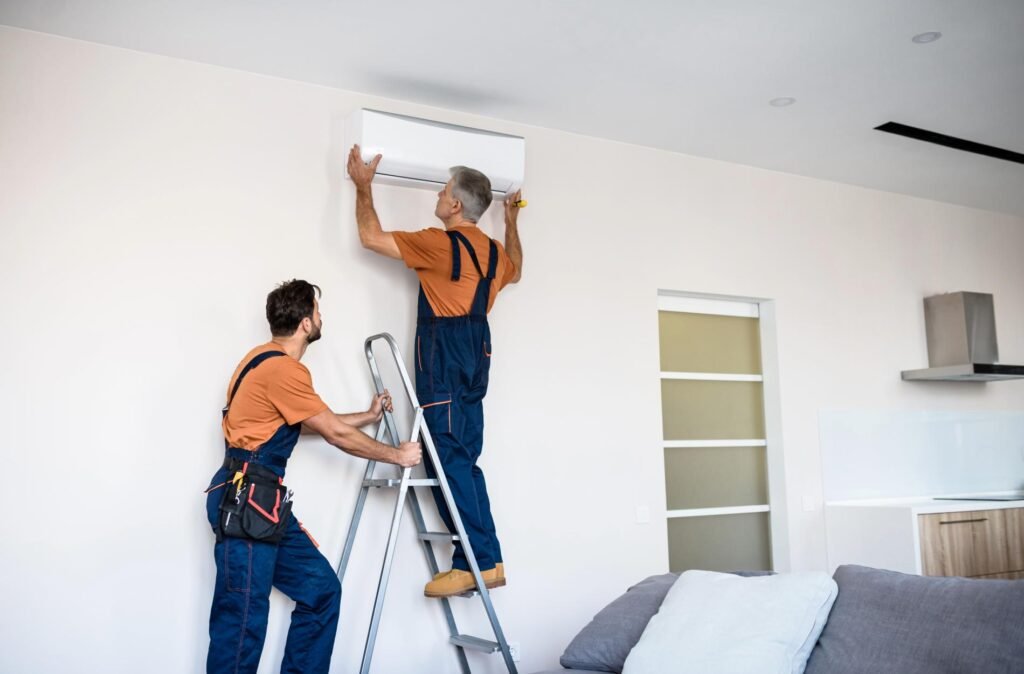
HVAC services in North Aurora
North Aurora’s housing divides into two jobs. The 41.9% built between 1960 and 1999 is the part with the metal flue, the basement or closet furnace and the electrical circuit that has already outlived one appliance. The 50.4% built after 1999 is the part with high-efficiency equipment, PVC venting and a condensate path that can freeze or clog. Both arrive as the same complaint, no heat, and both have to be identified from the rating plate before anything is quoted.
For a furnace that lights and drops out, or runs and never satisfies the thermostat, the starting point is what a heating repair visit tests and in what order. The sequence runs from the call for heat through the inducer, the proof of draft, ignition and the blower, which is how a North Aurora gas furnace is actually diagnosed. A sensor or ignition fault on a sound cabinet is a repair; a cracked heat exchanger or a failed inducer on a 25-year-old appliance is a different conversation.
When the cabinet is sound but the unit has reached the end of its life, what a furnace replacement involves covers sizing, venting and the choice between an 80% and a condensing furnace. Summer work follows the same logic from the other side: air conditioning services start with the charge and the airflow rather than a parts list, and a water heater past its warranty is the third appliance in these houses to reach the end of its life, which is why water heater replacement comes up on the same visits. Each linked page covers the service itself; this page covers what North Aurora’s housing stock does to it.
Call (630) 467-6249
Why homeowners in North Aurora choose a diagnostic-first visit
Most North Aurora houses are the same age, which is the problem. A subdivision built in one phase has one equipment vintage, one cabinet size and one vent arrangement, so a failure pattern on one street tends to repeat on the next. That makes the temptation to guess strong and the cost of guessing high. The visit is ordered instead: gas pressure and flame signal first, then draft and venting, then airflow and temperature rise. The model and serial off the rating plate decide which of those three is even possible, because a 2001 builder-grade unit and a 1975 unit fail in different places. The answer you get is a measurement with the repair and the replacement option written down, not a parts swap. Nothing in that sequence is skipped because a part is already on the van.
Why this winter is the time to look at a North Aurora furnace
- The median North Aurora house was built in 2000. A furnace installed when the house was new is now 25 years old, past the 15 to 20 years a gas furnace is normally expected to run, and it is the original unit rather than a replacement.
- 50.4% of the city's housing went up in 2000 or later, so a large share of North Aurora furnaces are reaching that age within a few winters of each other rather than spread across decades.
- 83.1% of homes burn utility gas, so a January failure is a gas-train failure far more often than a refrigerant one, and the parts that fail first are ignition and draft components.
- The 41.9% built between 1960 and 1999 is the older half: metal flues, basement cabinets and circuits that a replacement has to work with, which is where the cost of a rushed decision shows up.
- A furnace short-cycling on a restricted filter or a failing blower runs hot. Heat is what kills blower motors and warps limit switches, so the cheap repair now is the expensive one later.
What a heating visit covers
- The rating plate is read first: model, serial, input rating and manufacture date.
- Gas pressure and flame signal are measured at the valve and the flame sensor.
- Draft is proved at the inducer and the flue, including the termination outdoors.
- Airflow is checked at the filter, the blower and the temperature rise across the heat exchanger.
- The finding is put in plain language, with the repair and the replacement option written down and the temperature rise measured again before the visit ends.

Common questions from North Aurora homeowners
How old is the typical furnace in North Aurora?
Younger than in most Fox Valley towns and closer to the end of its life than owners expect. With a median year built of 2000 and 50.4% of homes built in 2000 or later, a large share of North Aurora furnaces are the original builder-grade units. A gas furnace is normally expected to run 15 to 20 years, so a unit installed when a 2001 house was new is already past that expectation.
Does North Aurora’s elevation affect a gas furnace?
No. North Aurora sits at 709.8 feet, and furnace installation instructions rate the appliance at nameplate input up to 2,000 feet, with a reduced input rating required above that line. At 710 feet the factory orifice is correct and no high-altitude kit is needed. The altitude conversation belongs to mountain markets, not to Kane County.
Why does my furnace light and then shut off?
Because the control proves flame and then loses the proof. The flame sensor is the common cause, followed by a pressure switch that cannot confirm draft, a blocked or displaced inducer, and a limit switch opening on restricted airflow. All three produce the same symptom from the thermostat, and telling them apart needs a meter on the flame signal and a reading of the pressure switch, not a replacement part chosen by symptom.
Which county is North Aurora in?
Kane County, and only Kane. The Census place-by-county relationship file lists North Aurora in one county, so a single recorder, a single assessing office and a single set of property records cover every address in the village. Where the county record and the rating plate disagree, the plate on the appliance is what identifies the equipment.
Does a furnace replacement in North Aurora need a permit?
That is settled by the village, not by the contractor, and it is worth asking before the unit is ordered. The answer can turn on whether the job is a like-for-like swap in the same cabinet or a change of venting, fuel or electrical circuit. Ask the village what the job needs and keep the answer with the invoice; the model and serial off the rating plate are what an application will ask for.
What is the most common heating problem in North Aurora?
Ignition and flame sensing on equipment now past its twentieth year. The pattern follows the housing: original furnaces from the 2000s boom, still on their first heat exchanger, failing at the sensor, the igniter or the inducer rather than at the cabinet. A measured flame signal and a draft reading separate those cases before any part is chosen.
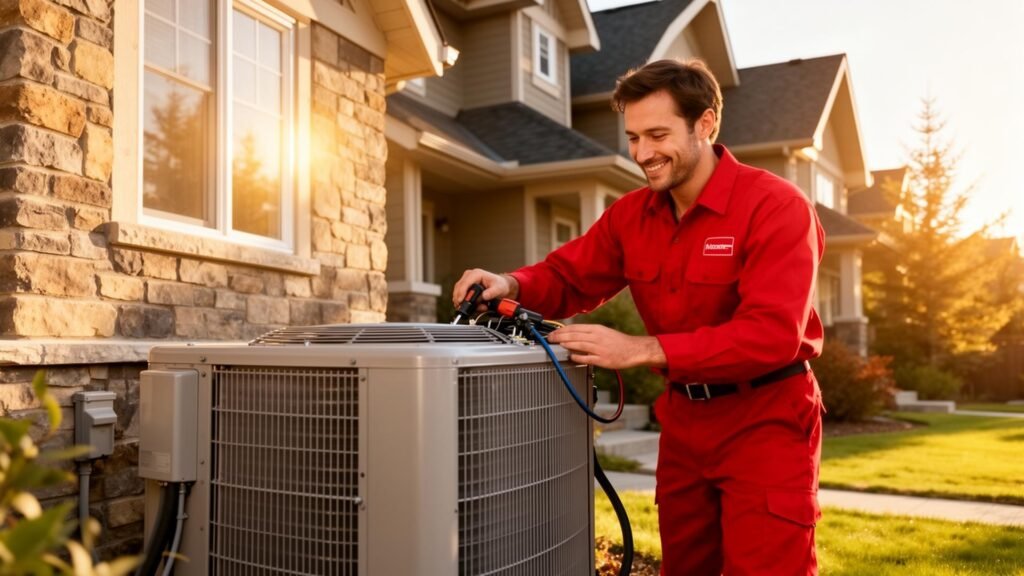
Repair or replace in North Aurora
The decision usually turns on the cabinet and the vent, not the part. In the older North Aurora housing the furnace sits in a basement or closet with a metal flue; in the 2000s subdivisions it is a high-efficiency unit with PVC venting and a condensate path. Replacing like for like keeps the footprint and the vent. Moving an 80% furnace to a condensing one adds a PVC termination and a condensate route, which is a different job and a different set of decisions. Two tests settle it: the heat exchanger is checked for cracks, and the static pressure is measured to see whether the existing ductwork can move the air a new unit needs. If both are sound and the fault is one sensor or igniter, repair is the honest answer.
North Aurora, IL - served from the Aurora shop
Next step: book a heating visit in North Aurora
Call (630) 467-6249
Tell us the city, the fuel and the symptom.
Have the rating plate ready
Model, serial and input rating identify the age and the parts.
If the furnace is locked out
Say so when you call. The fault code shortens the visit.
What the visit produces
A measured finding, the repair option and the replacement option, written before work starts.
Where we come from
HVAC Repair Aurora, 2847 Stonebridge Ct, Aurora, IL 60502.
After the visit
The finding is in writing, and repair is booked only if you approve it.